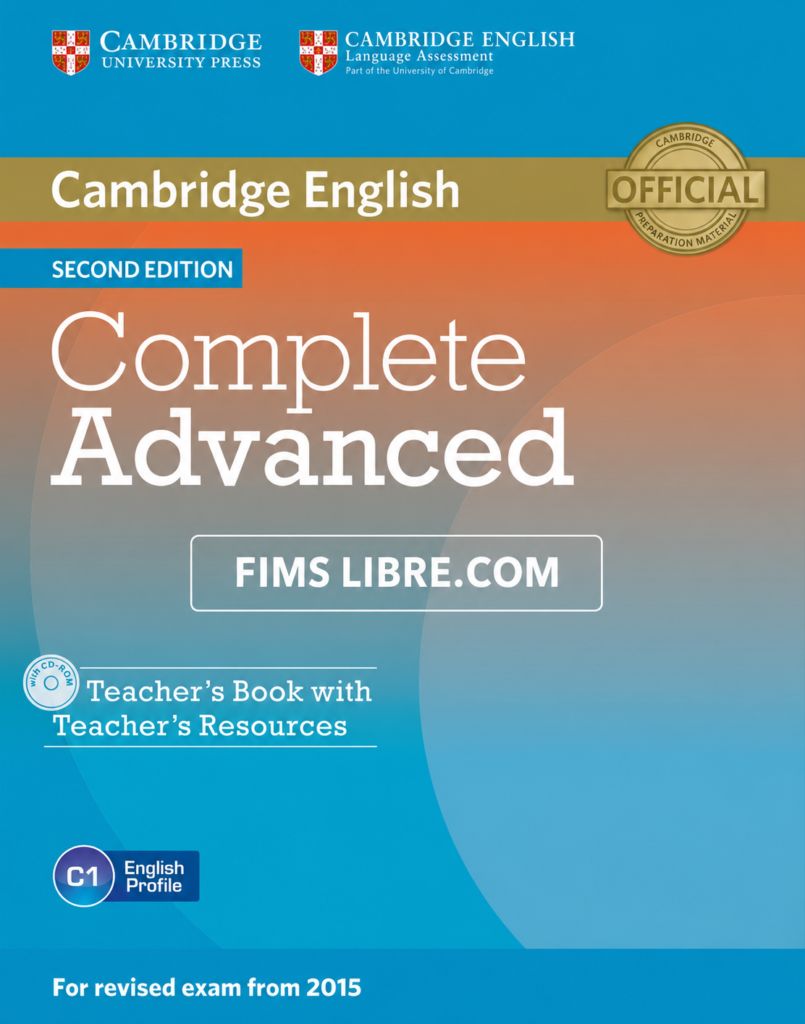
First Impressions
When I first opened Complete Advanced Teacher’s Book (Second Edition), I expected a fairly standard teacher’s guide with answer keys and lesson notes. Instead, I found something much more detailed. It quickly became clear that this isn’t a book designed to sit untouched on a teacher’s desk. It actively walks teachers through every lesson, explaining not only what to teach but often why a particular activity works and how it connects to the Cambridge C1 Advanced exam.
Although it’s primarily written for teachers rather than independent learners, I found myself appreciating how carefully everything has been planned. The book doesn’t rush into grammar explanations or exam practice. It spends time helping teachers prepare students to think about language, predict answers, discuss ideas, and build confidence before tackling each task.
What’s Covered in the Book
The material is organized into fourteen thematic units covering topics that feel broad enough to encourage genuine discussion rather than simple language drills. Early chapters focus on subjects like personality and family before moving into language learning, psychology, work, media, travel, health, and the natural world. Each unit also includes vocabulary and grammar review sections that help recycle what students have already studied.
One thing I noticed quite early is that every lesson follows a consistent rhythm. Reading, listening, grammar, vocabulary, speaking, and writing are all connected instead of feeling like separate exercises.
For example, the opening unit starts with conversations about personality and relationships before introducing grammar for talking about the past, vocabulary built around give and make, exam-style reading tasks, speaking activities, and finally essay writing. That progression felt natural rather than forced.
Another feature I liked was how often the teacher is encouraged to personalize lessons. Many activities begin with warm-up questions or small discussions before students move into the official exercises. That makes the lessons feel much less mechanical.
Some recurring elements include:
- authentic reading passages
- detailed listening activities with transcripts
- grammar presented through context
- vocabulary based on collocations rather than isolated word lists
- regular writing tasks connected to Cambridge exam formats
- extension activities for teachers who have extra classroom time
The book clearly aims to prepare students for the C1 Advanced examination, but it also tries to develop overall communication skills instead of teaching only exam tricks.
What I Enjoyed Most
Honestly, what surprised me most wasn’t the grammar explanations. It was the amount of support given to teachers.
Almost every activity includes suggestions for introducing the lesson, possible student difficulties, alternative classroom approaches, and extension ideas. I found myself thinking that newer teachers would probably gain quite a bit of confidence from these notes.
I also liked how often students are encouraged to predict answers before listening or reading. Rather than simply playing an audio recording and checking answers, the lessons repeatedly ask learners to think first. That small habit probably improves comprehension more than students realize.
I kept noticing that language wasn’t presented as something to memorize. Instead, it was usually introduced through conversations, situations, or exam-style tasks that gave the grammar and vocabulary a purpose.
The vocabulary sections were another highlight for me. Instead of endless lists of unrelated words, the book spends time on collocations like make, give, do, and get, along with expressions that naturally appear in advanced English. Those are exactly the kinds of things many learners struggle with even after years of studying.
A Few Things I Didn’t Like
To be fair, the book assumes that teachers are already fairly comfortable running communicative lessons.
Sometimes the lesson notes are incredibly detailed, while other times they move quite quickly through activities that could easily become challenging in a weaker classroom. Less experienced teachers might occasionally wish for even more examples of how a discussion could develop.
I also found the consistent exam focus to be a mixed experience. It makes perfect sense given the purpose of the book, but after several units I occasionally wanted a little more room for creativity outside the Cambridge exam format.
Another small point is that the structure becomes predictable after a while. That’s not necessarily a flaw—it certainly makes planning easier—but I did notice the repeated sequence from unit to unit.
Maybe it’s just me, but after reading many similar teacher resources, I appreciate moments that break the routine a little more.
My Reading Experience
Looking back, I think what stayed with me most was how practical the entire book feels.
Many teacher’s books simply provide answers and leave everything else to the instructor. This one regularly explains why a particular activity matters, reminds teachers about common learner mistakes, and even suggests follow-up discussions if students finish early.
I found myself reading beyond the lesson instructions simply because there were frequent teaching tips scattered throughout the pages. Small notes about encouraging prediction, building speaking confidence, or helping students organize essays made the guide feel more like an experienced colleague sharing advice than a manual listing procedures.
The writing sections were especially useful. Rather than asking students to produce essays immediately, the lessons spend time analyzing questions, planning paragraphs, linking ideas, and understanding assessment criteria. That gradual approach felt realistic because advanced writing usually improves through planning rather than inspiration.
If I’m being realistic, this isn’t the sort of book someone casually reads from cover to cover. It’s a working resource, and that’s exactly where it succeeds. Every section seems designed to make classroom teaching smoother while keeping learners focused on meaningful communication and exam success.
Final Thoughts
After spending time with Complete Advanced Teacher’s Book, I came away feeling that its greatest strength is balance. It never forgets that students are preparing for a demanding examination, but it also avoids reducing English to a collection of test strategies.
The lessons combine discussion, grammar, vocabulary, listening, reading, writing, and speaking in a way that feels connected rather than fragmented. Even when the material becomes challenging, the guidance remains clear and supportive.
It’s not completely free of repetition, and teachers looking for highly flexible lesson plans may occasionally want to adapt certain activities. Still, I finished the book with the impression that an enormous amount of classroom experience has gone into its design. More than anything, it feels like a resource written by people who understand both the realities of teaching and the challenges advanced English learners face every day.
Join Our Facebook Learning Groups
🇩🇪 Learn German Free 🇬🇧 English Learning Group 🇪🇸 Spanish Learning GroupJoin our educational Facebook communities to improve your language skills, practice daily conversations, and connect with learners from around the world.