Some Personal Thoughts
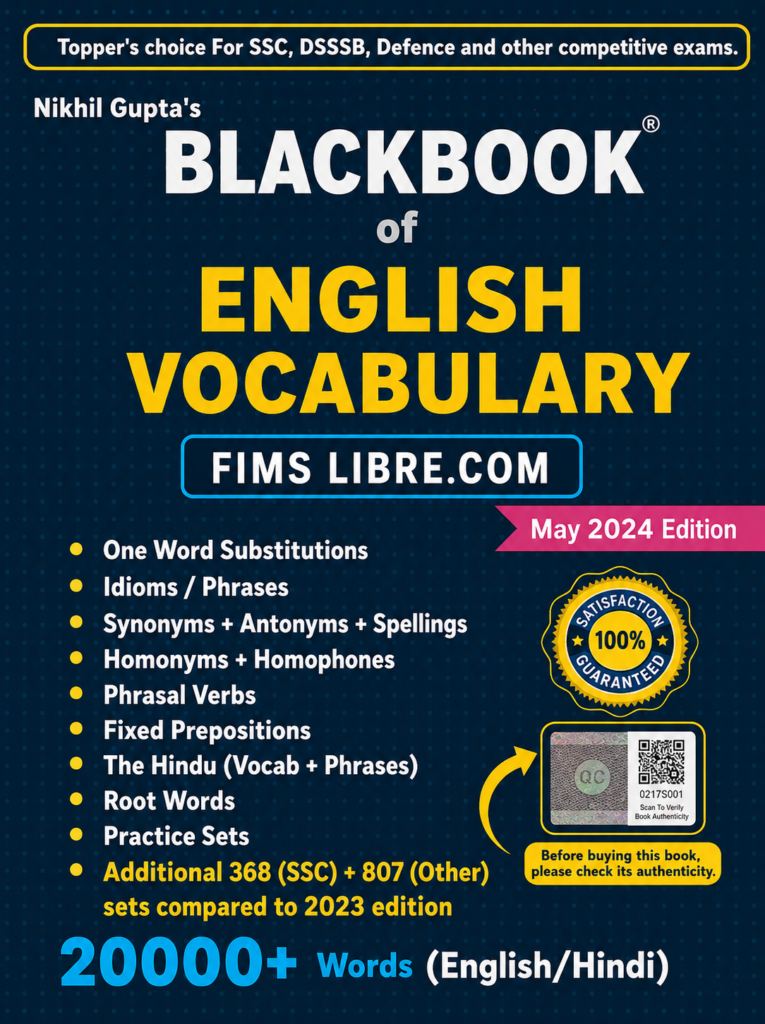
I picked up Black Book of English Vocabulary because I kept hearing people mention it while preparing for competitive exams. To be honest, I expected another oversized vocabulary book filled with endless word lists that would be impossible to finish. Instead, I found something that felt much more organized than I had imagined.
The first thing I noticed was that the book doesn’t try to impress readers with fancy layouts or unnecessary explanations. It gets straight to the point. Every page focuses on building vocabulary in a structured way, and after spending a few days with it, I started understanding why so many exam aspirants keep recommending it.
What You Might Learn
This isn’t the kind of book you read like a novel. It’s more of a daily companion that you return to again and again. The vocabulary is arranged in a way that encourages regular revision rather than one-time reading.
What I liked was that each word comes with a clear meaning, and in many sections there are Hindi translations as well. That makes learning much easier for readers who think in both English and Hindi. The book also covers one-word substitutions, commonly repeated exam words, and many terms that frequently appear in competitive exams.
As I moved through the chapters, I realized I wasn’t simply memorizing random words. Many of them were words I had seen before in newspapers or exam papers but had never fully understood.
A Few Things I Liked
One thing that really stood out was the consistency. Every section follows a similar pattern, so after a while you know exactly how to study from it.
A few features I appreciated were:
- Clear word meanings without unnecessary detail.
- Useful Hindi translations for quick understanding.
- Strong focus on vocabulary that actually appears in competitive exams.
- Easy-to-follow layout that makes daily revision simple.
- A huge collection of words gathered in one place.
Honestly, I also liked the fact that the book doesn’t waste pages trying to entertain the reader. It knows its purpose and stays focused on it.
Another small detail I appreciated was how often I found familiar words that I had misunderstood in the past. Correcting those little mistakes felt surprisingly satisfying.
Sometimes the biggest improvement doesn’t come from learning new words. It comes from finally understanding the ones you’ve been guessing for years.
A Couple of Weak Spots
To be fair, this isn’t the most exciting book to read for long periods. After forty or fifty pages, I usually needed a break because studying vocabulary requires concentration.
Maybe it’s just me, but I also wished there were more example sentences. While the meanings are clear, seeing the words used in everyday English would have helped me remember them even more easily.
Another thing worth mentioning is that beginners might feel slightly overwhelmed by the sheer number of words. There are hundreds of entries, and trying to memorize everything at once simply isn’t realistic. I found that studying a small number every day worked much better than rushing through large sections.
What Stayed With Me After Reading
The biggest lesson I took away wasn’t actually a vocabulary word. It was realizing that improving vocabulary is more about consistency than intelligence.
There were days when I learned only ten or fifteen words, but reviewing them regularly made a noticeable difference. After a couple of weeks, I started recognizing more unfamiliar words while reading newspapers and articles online.
Looking back, that gradual improvement felt much more rewarding than trying to memorize huge lists in a single sitting.
I also liked that the book gave me confidence before attempting mock tests. Instead of guessing meanings, I could often eliminate incorrect options simply because I had already seen those words during revision.
Is It Worth Your Time?
If you’re preparing for exams like SSC, Banking, CDS, or other competitive tests where vocabulary plays an important role, I think this book serves its purpose well. It isn’t trying to teach spoken English or advanced writing skills. Its main goal is to strengthen your vocabulary, and it stays focused on that throughout.
However, if someone is looking for a casual English-learning book with stories, conversations, or grammar lessons, this probably isn’t the best starting point. It works best as a reference and revision guide rather than something you read from beginning to end in one go.
Final Thoughts
If I’m being realistic, no vocabulary book can magically improve your English overnight. Real progress still depends on regular practice, revision, and using new words in daily life.
That said, I genuinely enjoyed studying from this one more than I expected. It isn’t flashy, and it doesn’t rely on exaggerated promises. Instead, it offers a practical collection of important vocabulary that rewards patience and consistency.
By the time I finished working through a good portion of it, I felt noticeably more comfortable with unfamiliar English words than when I started. For me, that steady sense of improvement was the book’s biggest strength, even if it occasionally demanded more patience than I would have liked.
Join Our Facebook Learning Groups
🇩🇪 Learn German Free 🇬🇧 English Learning Group 🇪🇸 Spanish Learning GroupJoin our educational Facebook communities to improve your language skills, practice daily conversations, and connect with learners from around the world.