First Impressions
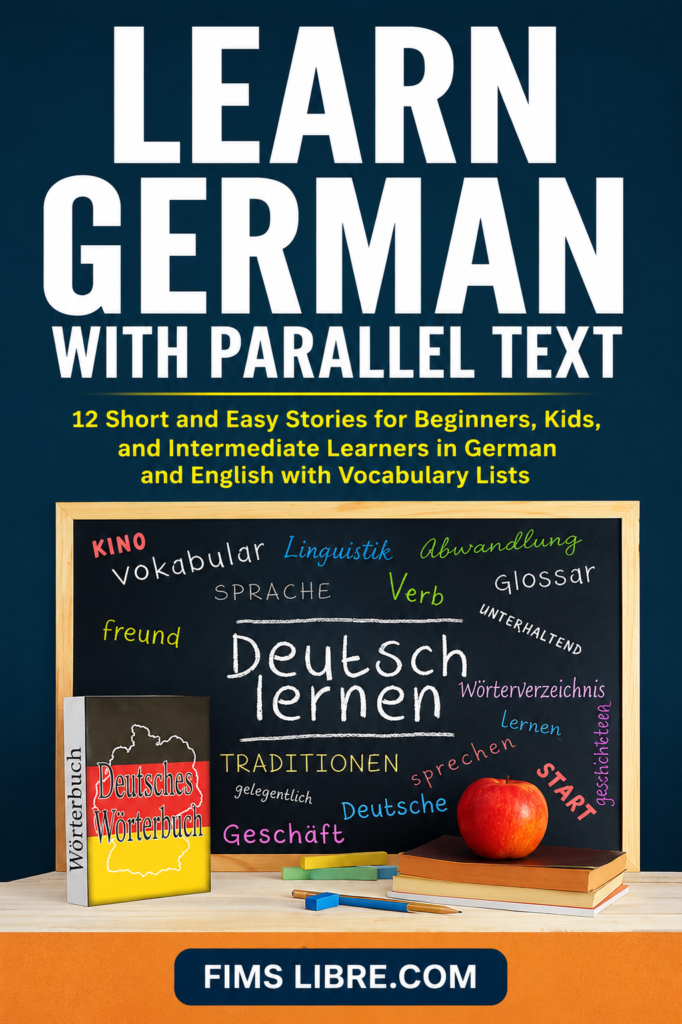
When I first saw this book, I honestly wasn’t expecting much beyond the usual dry, repetitive exercises I’m used to. We’ve all seen plenty of language books that promise “easy stories” only to bury you in vocabulary you’ll never actually use. But the parallel text format caught my eye—having the German on one side and the English on the other felt like a bit of a safety net. I figured if I got lost, I wouldn’t have to scramble for a dictionary every thirty seconds, which is usually the point where I just give up and close the book.
My Reading Experience
I didn’t try to treat this like a novel. Instead, I approached it like a slow, guided tour. I’d read one story a day, usually in the evening when my brain was starting to feel a bit fried from other things. At one point, I found myself ignoring the English side entirely, only peeking over when I felt like I was hitting a wall. It was a nice confidence boost to realize I could follow the plot without constantly relying on the translation.
Maybe it’s just me, but I found that reading these short, low-stakes narratives really helped lower my anxiety about “getting it right.” In a traditional textbook, every sentence feels like a test. Here, it just felt like reading.
Things That Stood Out to Me
What surprised me most was how much context matters. You see a word in isolation, and it means nothing. You see that same word in a sentence about someone trying to catch a train or order dinner, and suddenly it sticks. A few things really made the experience better:
- The stories are actually short, which meant I could finish one without feeling like I’d committed to a massive project.
- The vocabulary lists at the end were helpful, though I tried not to lean on them too heavily.
- There’s a nice variety in the themes, so it didn’t feel like I was reading the same story twelve times with different names.
A Couple of Weak Spots
To be fair, it isn’t perfect. If you’re hoping for complex, gripping literary fiction, you’re looking in the wrong place. These are definitely designed for learners, so the plots can feel a little bit thin and, dare I say, a bit predictable at times. I also found that some of the translations were a little literal, which didn’t always capture the natural flow of how a native speaker would actually say something. It’s a bit jarring when you’re trying to learn conversational rhythm and the text feels like it’s stuck in a rigid, translated structure.
What I Took Away From It
Looking back, I think the biggest lesson I learned is that “comprehensible input” isn’t just a buzzword. Actually seeing how sentences are built in a natural, story-based context did way more for my understanding than memorizing verb tables ever did. I stopped looking at grammar as a set of laws to be memorized and started looking at it as a way to structure a story.
Is It Worth Your Time?
If you’re at that frustrating stage where you know the basics but you feel like your reading comprehension is hitting a ceiling, this is a solid resource. It’s not going to make you fluent overnight, and it won’t replace a real conversation with a person, but it’s a very steady, reliable way to build your comfort level. It’s quiet, it’s low-pressure, and it helps you get used to the rhythm of the language without the constant feeling of failing a quiz.
Final Thoughts
If I’m being realistic, I still have a long way to go, but I feel less intimidated by long blocks of German text than I did a few weeks ago. That, to me, is the real win. This isn’t a magical, revolutionary method, but it is a very practical, helpful way to spend twenty minutes a day if you’re serious about nudging your skills forward.
📚 Related Books


Join Our Facebook Learning Groups
🇩🇪 Learn German Free 🇬🇧 English Learning Group 🇪🇸 Spanish Learning GroupJoin our educational Facebook communities to improve your language skills, practice daily conversations, and connect with learners from around the world.