First Impressions
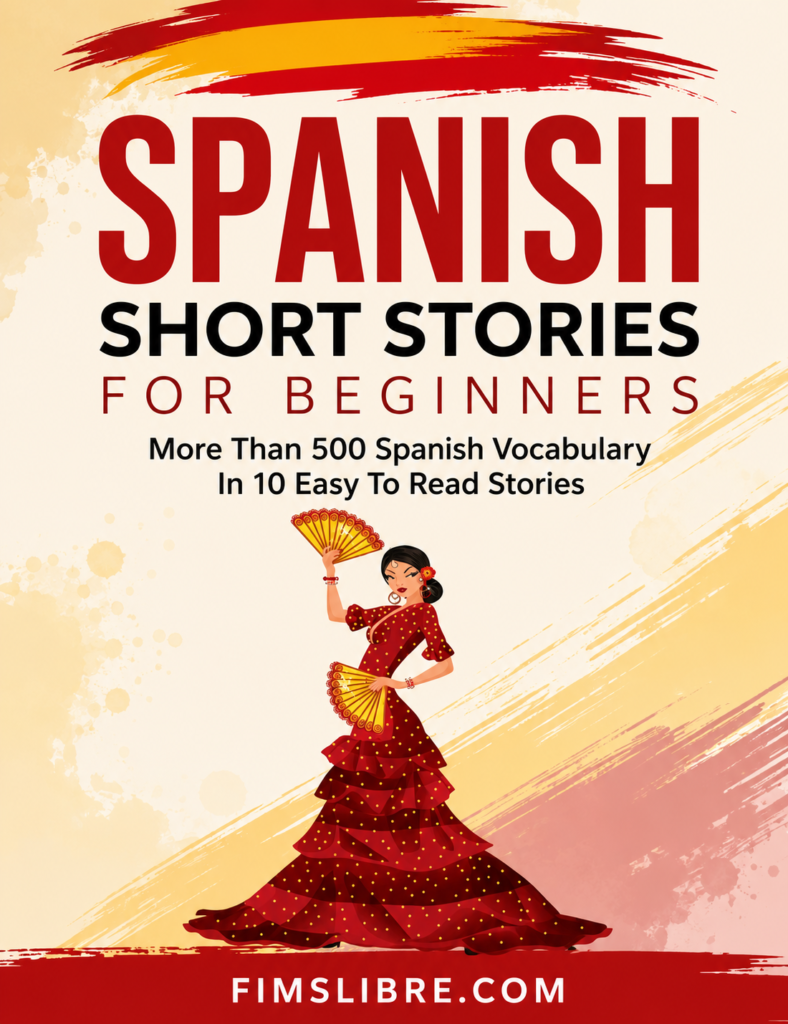
When I started reading Spanish Short Stories for Beginners: More Than 500 Spanish Vocabulary, I expected a collection of very simple stories with predictable endings. Instead, I found something a little more creative than I had imagined. The book doesn’t just throw vocabulary lists at the reader. It tries to teach Spanish through stories that actually have characters, emotions, and sometimes surprisingly unexpected twists.
Honestly, that made a big difference for me. Memorizing isolated words has never been my favorite way to learn a language, so seeing vocabulary appear naturally inside a story felt much more engaging.
A Quick Walk Through the Content
The book is divided into several short stories, and each one focuses on different vocabulary themes and grammar points. After every story, there’s a vocabulary section that highlights useful words and expressions you just encountered, making it easier to review without constantly flipping through a dictionary.
What I liked was that every story has its own personality. One chapter feels emotional, another reads almost like fantasy, while another explores imaginative worlds that keep things from becoming repetitive. Even though the primary goal is language learning, the stories still give you a reason to keep reading.
The progression also feels natural. New vocabulary builds on earlier lessons instead of appearing completely out of nowhere.
What Makes It Different?
I’ve used language books that rely heavily on grammar drills, and while those certainly have their place, they can become tiring after a while. This book takes a different path by encouraging learning through context.
I found myself remembering words because I connected them with scenes from the stories rather than because I had memorized them from a list. Somehow that made the vocabulary stick better.
Another feature I appreciated was the balance between reading and reviewing. Every story is followed by a vocabulary section that reinforces what you’ve just learned, which keeps the learning process organized without feeling repetitive.
Learning vocabulary inside a story felt much more natural than simply memorizing pages of isolated words.
A Couple of Weak Spots
To be fair, not every story connected with me equally. A few were genuinely entertaining, while others felt a little unusual or moved in unexpected directions that didn’t always keep my attention.
Maybe it’s just me, but some stories became surprisingly dramatic for what I expected from a beginner language book. I occasionally paused to make sure I hadn’t accidentally picked up a short novel instead of a learning resource.
There were also moments where I wished certain grammar explanations had been expanded. Since the book focuses primarily on reading, complete beginners may still want another grammar guide alongside it for additional clarification.
Another small limitation is that reading alone isn’t enough to improve pronunciation. The stories are excellent for building vocabulary, but listening practice is still necessary if speaking confidently is your goal.
What Stayed With Me After Reading
The biggest thing I noticed was how much easier reading Spanish became after finishing several stories. At first I was translating almost every sentence in my head. Later, I realized I was understanding entire paragraphs without stopping nearly as often.
That was probably the most satisfying part of the experience.
I also enjoyed how the stories introduced everyday expressions that don’t always appear in traditional textbooks. Those little conversational phrases made the language feel more alive and less mechanical.
Looking back, I think the storytelling approach kept me motivated longer than a collection of exercises would have.
Who Will Probably Enjoy This
I think this book works especially well for beginners who already know a handful of Spanish words but want to become more comfortable reading complete sentences.
It’s also a good fit for independent learners who enjoy learning through stories rather than endless grammar exercises.
People preparing for travel or looking to expand their vocabulary will probably find plenty of useful expressions throughout the chapters. On the other hand, if you’re searching for an advanced grammar reference or extensive speaking practice, you’ll likely need additional resources alongside this one.
Final Thoughts
If I’m being realistic, no single book can teach an entire language, and this one doesn’t try to make that promise. Instead, it focuses on helping readers become more comfortable with Spanish through interesting stories and repeated exposure to useful vocabulary.
I finished the book with a larger vocabulary than when I started, but more importantly, I felt much more confident reading simple Spanish passages without constantly reaching for a dictionary.
For me, that’s what made the experience worthwhile. It isn’t perfect, and there were a few stories that didn’t resonate as much as others, but overall it made language learning feel less like studying and more like enjoying a collection of short, imaginative tales while naturally picking up Spanish along the way.
Join Our Facebook Learning Groups
🇩🇪 Learn German Free 🇬🇧 English Learning Group 🇪🇸 Spanish Learning GroupJoin our educational Facebook communities to improve your language skills, practice daily conversations, and connect with learners from around the world.